
Whole-House Fan Installation and Repair in Las Vegas, NV
A whole-house fan cools with outside air, so it earns its keep on Las Vegas evenings, nights and mild spring and fall days. We install, replace and repair them, and tell you where they fall short.
- 24/7 emergency service
- Licensed technicians
- All makes and models
What a whole-house fan does
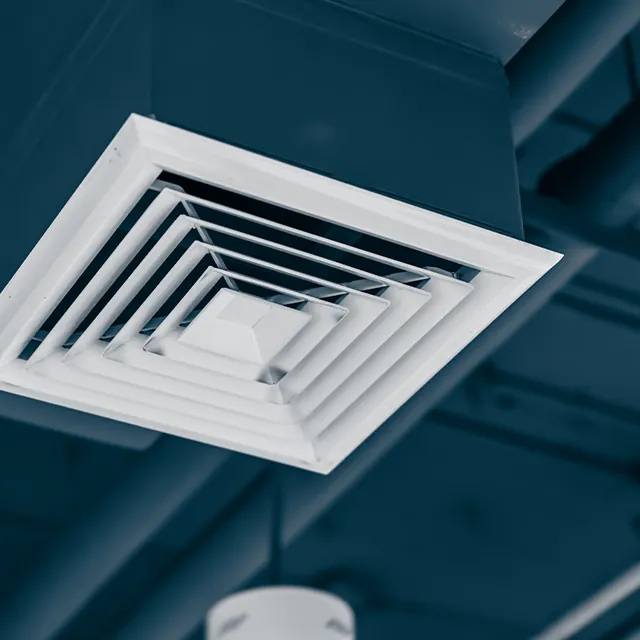
A whole-house fan sits in the ceiling or attic, usually above a central hallway. With a few windows open, it draws outdoor air through the living space, pushes it into the attic and out through the attic vents. Within minutes the air in the house has been exchanged, and the attic, which stores much of the day's heat, gets flushed as well.
It is not an air conditioner. A fan cannot make the house cooler than the air outside, and it does not remove humidity. It is also different from an attic fan, which ventilates only the attic and moves no air through the rooms. What a whole-house fan offers is a great deal of air movement for a small part of the electricity a central air conditioner draws. The other low-energy option common here, an evaporative cooler, cools the air with water instead of relying on cool air outdoors.
When it works in Las Vegas, and when it does not
The rule is simple: run the fan only when it is cooler outside than inside. Here that means:
- Spring and fall. The fan's best seasons. Days are warm, evenings cool off fast, and many households can leave the air conditioner off for weeks.
- Summer nights and early mornings. Useful once the outdoor temperature drops below the indoor temperature. In midsummer that may not happen until late at night, and on the hottest nights it may not happen at all.
- Summer afternoons. Not useful. Pulling 105°F air through the house only heats it. Keep the windows shut and let the air conditioner work.
There are other times to leave it off. The fan brings in whatever is outside, unfiltered, so skip it when the wind is carrying dust, when wildfire smoke is in the valley, or when pollen bothers someone in the house. On humid monsoon evenings it pulls that moisture indoors, and the air conditioner then has to remove it. Treat the fan as a partner that shortens the season for your central air conditioner, not as a replacement for it.
Installation: sizing, attic venting and safety
A good installation comes down to four things.
- Airflow. Fans are rated in cubic feet per minute. We match the rating to the size of the house and how quickly you want the air changed. Multi-speed models run on high to flush heat, then low and quiet overnight.
- Attic vent area. Air has to leave the attic as fast as the fan delivers it. Too little vent area chokes the fan, raises noise and can push dusty attic air back into the house. We measure the existing vents and add more where needed.
- Fan style. Traditional units mount directly in the ceiling behind louvers. Newer designs hang the fan in the attic at the end of a short insulated duct, with a damper at the ceiling. They are much quieter and seal better when off.
- Power and controls. The fan needs a suitable circuit and a wall control. A timer is worth having, so the fan shuts itself off after you are asleep.
One safety rule comes before the rest: open the windows before switching the fan on. In a closed house the fan creates strong suction that can pull exhaust gases, including carbon monoxide, back down the flue of a gas water heater or furnace.
Repairing or replacing an older fan
These are simple machines, and most problems trace to a few parts. On belt-driven models a worn or loose belt squeals or slips and the blades turn slowly. Motors fail from heat and dust, or the motor's capacitor does, leaving a fan that hums without starting. Louvers and dampers stick open or closed. Switches, timers and speed controls wear out. Rattles and vibration usually mean loose mounting or a bent blade.
Repair is often the sensible choice. An old direct-mount fan that roars, shakes the ceiling and leaks air through its louvers when it is off is a good candidate for replacement with a quieter ducted model, because that leaky opening works against your air conditioner and heater every month the fan sits idle. Your own upkeep is light: keep the attic vents clear, vacuum dust from the grille or louvers, and in winter make sure the damper closes fully or fit an insulated cover.
Arranging a visit
Before recommending a fan we look at the attic: how much room there is, how it is vented, where the joists and ducts run, and where a switch can go. Then we tell you which size and style fits and what, if anything, has to change in the attic first. Existing fans of any make or model can be repaired or swapped out by our licensed technicians. We cover Las Vegas and nearby Clark County communities. Call 702-497-0888 to set a time.
Frequently asked questions
Still have a question? Call 702-497-0888.
Can a whole-house fan replace air conditioning in Las Vegas?
No. A fan can only bring the house down toward the outdoor temperature, and summer afternoons here are well above 100°F. It can stand in for air conditioning through much of spring and fall and take over on cooler summer nights, which cuts the hours the air conditioner runs. Homes here still need refrigerated cooling for the heat of the day.
How many windows should I open?
Open at least two or three windows several inches before turning the fan on, in the rooms you want cooled. Be generous with the total opening. If doors slam shut or the fan sounds strained, open more. Never run the fan with the house closed up, because the suction can backdraft gas appliances and pull carbon monoxide indoors.
Are whole-house fans noisy?
Older direct-mount fans can be loud, since the motor and blades sit right at the ceiling. Ducted models place the fan several feet back in the attic and are far quieter, particularly on low speed. Noise also rises when attic venting is too small, so getting the vent area right is part of keeping any fan quiet.
Will a whole-house fan bring dust into my home?
It brings in whatever the outdoor air carries, since the air comes straight through open windows with only the screens in the way. On calm, clear evenings that is rarely a problem. On windy days, during dust advisories or when smoke is in the air, leave the fan off and use the air conditioner, which recirculates indoor air through its filter.
What is the difference between a whole-house fan and an attic fan?
An attic fan moves air through the attic only, to lower attic temperature, and does not cool the rooms below. A whole-house fan is much larger. It draws outdoor air through open windows and the living space and exhausts it through the attic. The first ventilates the attic, and the second ventilates the house and the attic together.
Schedule service
Tell us what is going on and we will call you back to set a time. For anything urgent, the phone is fastest.
702-497-0888- 24/7 emergency service
- 3200 Kings Way, Las Vegas, NV 89102
View in Google Maps