
Sump Pump Installation and Repair in Las Vegas, NV
Few Las Vegas homes have basements, but any room, pit or low corner that sits below the surrounding ground can flood in a monsoon downpour. A sump pump is what gets that water out.
- 24/7 emergency service
- Licensed technicians
- All makes and models
Which Las Vegas properties need a sump pump
We will be straight about this: most homes in the valley are built on a slab at ground level and will never need a sump pump. The ones that do have somewhere for water to collect that gravity cannot drain. Typical cases:
- Basements, wine cellars and other finished rooms below ground level.
- Crawl spaces under raised-floor houses.
- Sunken patios, stairwells and window wells.
- Garages and driveways that slope down from the street.
- Low corners of a lot where storm runoff ponds against the foundation.
- Equipment vaults and pits on commercial sites.
Rain here is rare, but it arrives fast. A summer monsoon cell can drop a lot of water in minutes onto hard desert ground that absorbs little of it. If water only crosses your yard on its way somewhere else, better grading or a surface drain may solve it without a pump. A pump is for water that ends up trapped.
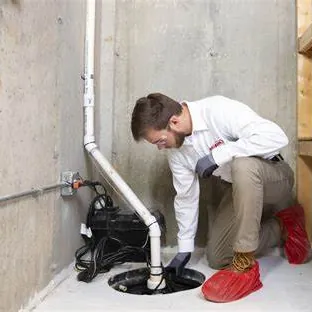
How a sump system is put together
The parts are simple, and each has to be right for the pump to work on the one night you need it.
- Basin. A lined pit set at the lowest point, where water gathers.
- Pump. Submersible pumps sit in the water and run quietly under a sealed lid. Pedestal pumps keep the motor above the pit, which suits narrow basins and makes service easier.
- Switch. A float or sensor starts the pump as the water rises and stops it once the pit is empty.
- Discharge line. Pipe carries the water out to a spot where it drains away from the building, with a check valve so it cannot run back into the pit.
Sizing matters more than the horsepower on the label. We look at how fast water arrives and how high and how far it has to be pushed, then choose a pump that keeps up without switching on and off every few seconds. Where the discharge may go is set by local rules; as a rule it does not belong in the sanitary sewer. The pump should have its own properly grounded outlet, not an extension cord.
A toilet or sink below the level of the sewer needs a different machine, a sewage ejector pump, which ties into the sewer line.
Battery backup and high-water alarms
The storm that fills the pit is often the storm that knocks out the power. A standard pump does nothing without electricity, so for any finished space we recommend a backup. The common setup is a second, battery-powered pump mounted slightly higher in the same basin with its own float, charger and battery. It takes over when the power fails, and also if the main pump jams or cannot keep up.
A backup is a bridge, not a second primary pump. How long it lasts depends on the battery and on how often the pump has to cycle, and the battery itself needs replacing every few years. A high-water alarm adds a simple layer of warning. It sounds when the water climbs past the normal switch-on level, and some models can send an alert to your phone while you are away.
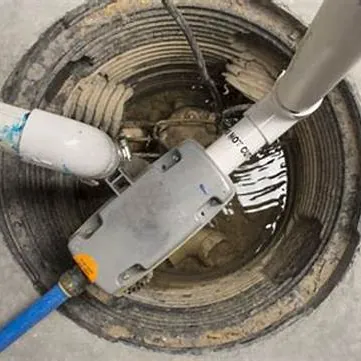
Testing, maintenance and signs of trouble
In the desert a sump pump spends most of the year sitting dry, and that is hard on it. Dust and silt settle in the pit, floats stick and seals dry out. Test it in late spring, before monsoon season, which usually starts in July:
- Slowly pour a bucket or two of water into the pit until the float lifts.
- The pump should start by itself, empty the pit and shut off.
- Go outside and confirm that water is leaving the end of the discharge pipe and that the outlet is not buried or blocked.
- Clear debris from the basin, then unplug the main pump briefly to prove the backup and alarm work.
Call for repair if the pump hums without moving water, runs nonstop, starts and stops rapidly, trips its breaker, grinds or rattles, or shows heavy rust. Many pumps last somewhere around ten years, fewer if they sit in silty water. If a yard or patio drain feeding the pit is blocked, our drain cleaning service can clear that too.
Sump pump service from our plumbers
We install new systems, replace worn pumps, add battery backups and alarms, and repair switches, check valves and discharge lines on all makes and models. If your pit is filling during a storm and the pump is not keeping up, call 702-497-0888 at any hour; emergency service runs 24/7. For planned work, a licensed plumber looks at where the water comes from first, because the right answer is sometimes a drain or a grading fix and not a bigger pump. You can also send us the details and we will set a time.
Frequently asked questions
Still have a question? Call 702-497-0888.
Do I need a sump pump if my house has no basement?
Usually not. A slab home on a properly graded lot sheds rain without one. You may need a pump if you have a crawl space, a sunken room or patio, a driveway that slopes toward the garage, or a low spot where storm water stands against the house. If water has come in once during a monsoon, it is worth having the site looked at.
How often should I test my sump pump?
Test it at least once a year, ideally in late spring before the monsoon, and again partway through the season if the space it protects is finished. Pour water into the pit until the float rises and watch the pump start, drain the basin and stop. Check the backup battery and the alarm on the same occasion.
How long does a sump pump last?
Many last roughly ten years, but there is a wide spread. Pumps that cycle often, handle gritty water or sit unused and dry for long periods tend to fail sooner, and switches often give out before motors do. If yours is getting on in age and protects a finished room, replacing it on your schedule beats finding out during a storm.
What happens if the power goes out during a storm?
A pump that runs only on household power stops, and the pit fills. That is the reason for a battery backup: a separate pump with its own battery and float that starts automatically when the main pump cannot run. It will not run indefinitely, so the battery should be tested each year and replaced every few years.
Where does the water from a sump pump go?
It is piped outside to a place where it flows away from the foundation and does not run onto a neighbor's lot or back toward the house. Local rules govern acceptable discharge points, and connecting a sump pump to the sanitary sewer is generally not allowed. We work out the discharge route as part of the installation plan.
Schedule service
Tell us what is going on and we will call you back to set a time. For anything urgent, the phone is fastest.
702-497-0888- 24/7 emergency service
- 3200 Kings Way, Las Vegas, NV 89102
View in Google Maps