
Backflow Preventer Installation and Repair in Las Vegas
A backflow preventer keeps water from your irrigation, pool, boiler or equipment from flowing backward into the drinking water. We install, repair and replace these devices for homes and businesses.
- 24/7 emergency service
- Licensed technicians
- All makes and models
What backflow is and where it happens
Water in your plumbing is meant to travel one way, from the main to the tap. Backflow is that flow reversing, so water that has already left the drinking system gets drawn or pushed back into it. It happens in two ways. Backsiphonage occurs when supply pressure drops suddenly, for instance during a main break or heavy hydrant use, and the system sucks water backward. Backpressure occurs when something downstream, such as a pump or a heating system, pushes harder than the supply.
Either one needs a cross-connection, a point where drinking water meets something that is not drinkable. Common ones include:
- Lawn irrigation, where sprinkler heads sit in soil, fertilizer and pet waste.
- Pool and spa fill lines.
- A garden hose left in a bucket, pool or chemical sprayer.
- Boilers and hydronic heating loops treated with chemicals.
- Fire sprinkler systems and commercial equipment such as beverage machines and chemical dispensers.
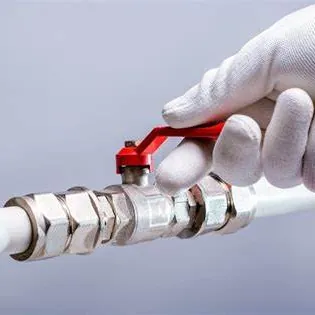
Types of backflow preventers in plain terms
The right device depends on how hazardous the downstream water could be and which kind of backflow is possible.
- Air gap. An open space between a water outlet and the highest level water can reach, like a faucet spout above a sink rim. Nothing mechanical to fail.
- Vacuum breaker. A small valve that lets air in to break a siphon. The screw-on kind on hose bibbs is the simplest. A pressure vacuum breaker is the version often seen on sprinkler systems; it guards against backsiphonage only and has to sit higher than the highest sprinkler head it serves.
- Double check valve assembly. Two spring-loaded check valves in a row, used where the downstream water is a nuisance and not a health hazard.
- Reduced pressure assembly. Two check valves with a relief valve between them that dumps water out of the device if either check leaks. It gives the highest mechanical protection and is used for higher hazards. Because it can discharge, it needs to sit above ground with drainage.
Your water provider and the plumbing code decide which of these is acceptable for a given connection.
Installation, repair and replacement
Installing an assembly correctly is mostly about position. It has to face the right direction, sit at the required height, drain freely if it is a type that discharges, and leave room to reach the shutoff valves and test ports. We size it to the line so it costs as little pressure as possible, support the piping on both sides, and obtain a permit where one is required. A new device on the service line is often fitted alongside work on the main water line.
Signs that an existing device needs repair:
- Water dripping or streaming from the relief port.
- Leaks at the body, the caps or the test ports.
- A drop in water pressure downstream.
- Cracks, heavy corrosion or damage after a cold snap.
Most assemblies can be rebuilt. The rubber discs, seals and springs inside wear out, and replacing them along with a good cleaning usually returns the device to service. Replacement makes more sense when the body is cracked, parts are no longer made, the device keeps failing, or it is the wrong type for the hazard it protects.
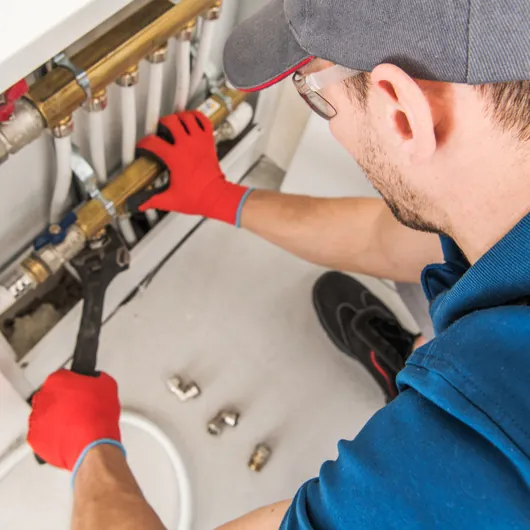
Backflow requirements and conditions in Las Vegas
Rules on backflow protection are set locally. What device you need, and what testing or paperwork goes with it, depends on your water provider and the type of property. A house with a sprinkler system is treated differently from a restaurant or a medical office. We can tell you what applies at your address before any work is planned.
The desert is rough on these devices. Very hard water leaves scale on check seats and relief valves, and a single grain of grit can hold a check open. Strong sun ages plastic caps and rubber parts on assemblies that stand in the open. Cold desert nights occasionally dip below freezing, and water trapped in an exposed brass body can crack it. An insulated cover helps, as long as it does not block the relief port.
Keep the device visible and reachable, never bury it under landscaping or rock, and look it over for drips when the sprinklers run.
How to arrange backflow service
Call 702-497-0888 and describe what you have: where the device is, what it is connected to and what it is doing. Our licensed plumbers work on all makes and models, for homes and for commercial properties, across Las Vegas, Enterprise, Spring Valley and other Clark County communities. A relief valve that is pouring water wastes a great deal in a short time, so we treat that as urgent and answer 24/7. For anything else, send us a note and we will arrange a visit.
Frequently asked questions
Still have a question? Call 702-497-0888.
What does a backflow preventer do?
It lets water flow in one direction only, so water that has entered an irrigation system, pool line, boiler or piece of equipment cannot return to the pipes that supply drinking water. Depending on the type, it does this with an air space, an air-inlet valve or spring-loaded check valves, sometimes with a relief valve that vents water if a check leaks.
Do I need a backflow preventer on my sprinkler system?
An irrigation system connected to drinking water needs backflow protection, because sprinkler heads sit in soil, fertilizer and animal waste. Which device is acceptable, and whether any testing or paperwork is involved, depends on your water provider and the type of property. Tell us your address and we will find out what applies before recommending anything.
Does my backflow preventer have to be tested?
It depends on your water provider and the kind of property you have, so there is no single answer for the whole valley. Some connections carry testing requirements and others do not. Give us the address and a description of what the device serves, and we can tell you what applies to you.
Why is water coming out of my backflow preventer?
On a reduced pressure assembly, discharge from the relief port usually means a check valve is not sealing, often because grit or scale is caught on its seat or a rubber disc has worn. A brief spit during pressure changes can be normal. A steady drip or stream is not. On an irrigation device you can close its inlet shutoff valve to stop the loss until it is serviced.
Can a backflow preventer be repaired, or does it need replacing?
Most can be repaired. Assemblies are built to be opened, cleaned and rebuilt with new rubber parts and springs, and that fixes the majority of leaks and failures. Replacement is the better route when the body has cracked from freezing, is badly corroded, parts are unavailable, or the device is no longer the right type for what it protects.
Related plumbing services
Schedule service
Tell us what is going on and we will call you back to set a time. For anything urgent, the phone is fastest.
702-497-0888- 24/7 emergency service
- 3200 Kings Way, Las Vegas, NV 89102
View in Google Maps