
Gas Line Installation and Repair in Las Vegas, NV
We install, extend and repair natural gas piping for homes and businesses. If you smell gas right now, leave the building first and call the gas utility or 911 from outside.
- 24/7 emergency service
- Licensed technicians
- All makes and models
If you smell gas, do this first
Natural gas has no smell of its own. The utility adds an odorant that smells like rotten eggs so a leak gets noticed. If you smell it, or hear hissing near a gas line or appliance, act in this order:
- Leave the building immediately and take everyone, pets included, with you.
- On your way out, do not touch light switches, appliances, thermostats or the garage door opener, and do not use a phone inside. Do not light a match or lighter, and do not start a car in an attached garage. Any of these can make a spark.
- Once you are outside and well away from the building, call the gas utility's emergency line or 911.
- Stay out until the utility or the fire department tells you it is safe.
- After the gas has been made safe, call a licensed plumber to find and repair the leak.
Do not go looking for the leak yourself, and do not go back in to open windows. The utility will normally shut off the gas at the meter. The piping on your side of the meter is yours, and that repair is where we come in.
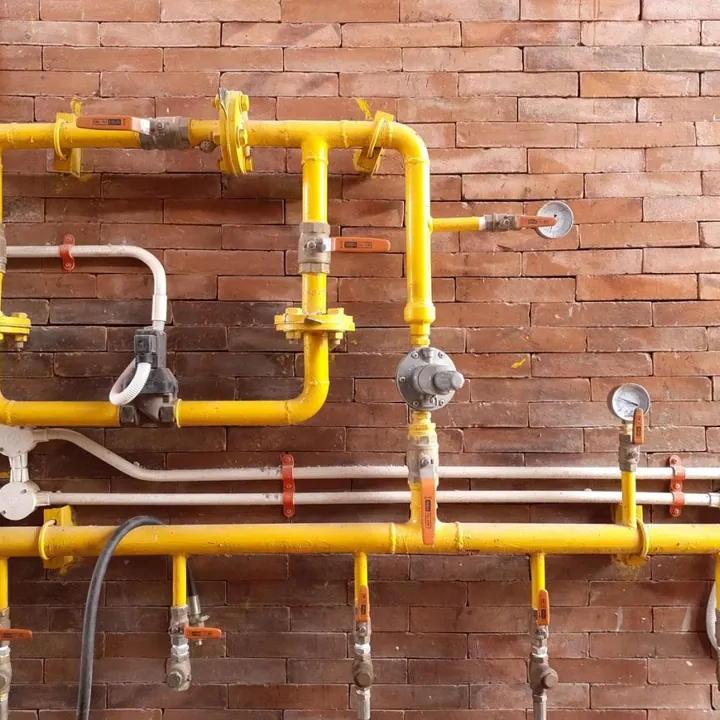
New gas lines and appliance hookups
We run gas to ranges, dryers, water heaters, furnaces, fireplaces, pool and spa heaters, built-in grills, fire pits and standby generators. The part that matters most is sizing. Every appliance has a rated gas demand, and the pipe has to deliver the combined demand over the full length of the run. Add a large appliance such as a tankless water heater or a pool heater to a line sized for less, and everything on that line can be starved for gas. A big added load may also call for a meter upgrade from the utility.
Material depends on location:
- Black steel pipe. The long-standing standard for indoor and exposed runs, with threaded joints.
- Corrugated stainless steel tubing. Flexible, with fewer joints. It must be bonded to the electrical grounding system as its manufacturer and the code require.
- Polyethylene pipe. Used for buried runs to outdoor appliances, laid with a tracer wire and proper risers where it comes above ground.
Each appliance gets its own shutoff valve within reach and, where a flexible connector is used, a new one.
Gas leak repair, pressure testing and permits
Leaks tend to occur at the same places: old appliance connectors, valves, unions and threaded joints, steel pipe that has rusted where it is buried or wetted by irrigation, and lines struck during digging. We track them down with an electronic gas detector and a leak-detection solution that bubbles at the leak, then replace the fitting or the section of pipe.
A repair or new line is not finished until it passes a pressure test. The piping is isolated from the appliances, capped, filled with air and watched on a gauge for a set period. If the needle holds, the system is tight. If it drops, we keep looking. The test is done with air, never with gas.
New gas piping and most alterations need a permit and an inspection from the local building department. After a shutoff, the utility often will not restore service until the work has passed. The pressure test and any permit the job requires are part of doing gas work properly, and we handle both.
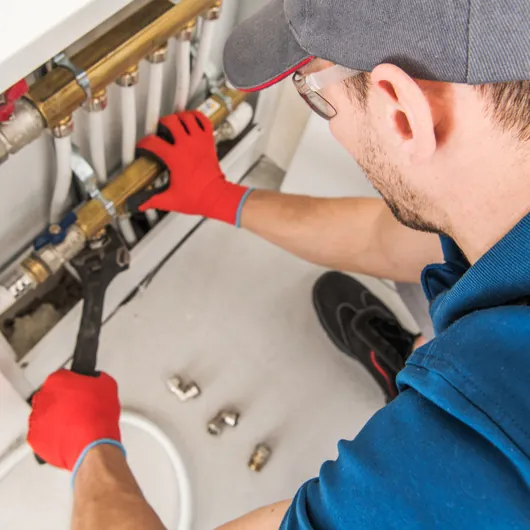
Gas safety habits for Las Vegas homes
Outdoor living is a big part of life here, and many yards have a gas grill, fire feature or pool heater fed by a buried line. A few habits prevent most gas problems:
- Call 811 a few days before you dig, trench or plant, so buried lines are marked.
- Know where your gas meter and its shutoff valve are, and keep the area around the meter clear.
- Replace the flexible connector whenever an appliance is replaced. Old connectors should not be reused.
- Never hang anything from gas piping.
- Fit carbon monoxide alarms on every level and near bedrooms, and test them. Carbon monoxide comes from poor combustion, has no smell and is a separate hazard from a gas leak.
- Have gas appliances checked periodically. Your furnace sits idle through the long summer and should be looked at before the first cold night.
Working with our plumbers on a gas job
For planned work, call 702-497-0888 and tell us what you want to add and roughly where, or send us a message with the details. A licensed plumber will check the existing piping and meter capacity, lay out the route, and explain what the permit and test involve before anything is cut. For a leak the utility has already shut off, we take calls 24/7 so you are not left without hot water or heat longer than necessary. We work in Las Vegas, Henderson, North Las Vegas and the rest of our service area.
Frequently asked questions
Still have a question? Call 702-497-0888.
What should I do if I smell gas in my house?
Leave the building straight away with everyone in it. Do not flip switches, use a phone or start a car while you are inside or close to the house. From a safe distance outside, call the gas utility's emergency line or 911 and wait for them to make it safe. After that, call a licensed plumber to repair the leak.
Can I install or extend a gas line myself?
We strongly advise against it. Gas piping has to be sized for the load, assembled with approved materials, pressure tested and, in most cases, permitted and inspected. A joint that seeps or a line that is too small may not show a problem until an appliance misfires or gas collects. This is work for a licensed plumber.
Do I need a permit to add a gas line?
In most cases, yes. Local building departments generally require a permit and an inspection for new gas piping and for alterations to existing piping, including lines to outdoor appliances. The inspection normally includes a pressure test. Requirements differ somewhat between jurisdictions in Clark County, so we confirm the local requirement before starting.
Who is responsible for the gas line, me or the gas company?
Generally the utility owns and maintains the service line and the meter, and the property owner is responsible for all the piping after the meter, including buried lines to a pool heater or grill. The utility will respond to a leak and shut off the gas, but repairs to your piping are done by a licensed plumber you hire.
Is a gas leak the same as carbon monoxide?
No. A gas leak is unburned fuel escaping from piping or an appliance, and you can usually smell the added rotten-egg odorant. Carbon monoxide is produced when fuel burns without enough air, and it has no smell or color. Only an alarm detects it. If a carbon monoxide alarm sounds, get everyone outside to fresh air and call 911.
Related plumbing services
Schedule service
Tell us what is going on and we will call you back to set a time. For anything urgent, the phone is fastest.
702-497-0888- 24/7 emergency service
- 3200 Kings Way, Las Vegas, NV 89102
View in Google Maps