
AC Repair and Maintenance in Las Vegas, NV
When an air conditioner quits in a Las Vegas summer, it needs to be diagnosed properly and fixed. We repair and maintain all makes and models, with 24/7 emergency service.
- 24/7 emergency service
- Licensed technicians
- All makes and models
Signs your air conditioner needs repair
An air conditioner rarely stops without warning. Most give a few days or weeks of hints first, and catching them early usually means a smaller repair. Call for service if you notice any of these:
- Air from the vents is warm or only slightly cool
- Airflow is weak in some rooms or in all of them
- The system starts and stops every few minutes
- Ice has formed on the copper line or the indoor coil
- There is water around the indoor unit or a stain on the ceiling below it
- The breaker has tripped more than once
- You hear grinding, squealing or rattling that was not there before
- The outdoor unit hums but its fan is not spinning
If you see ice, switch cooling off and set the fan to On so the coil can thaw. Running a frozen system can damage the compressor, the costliest part of the unit.
What you can check before you call
Some no-cool calls turn out to be simple. Five minutes on these checks can save you a visit:
- Thermostat. Confirm it is set to cool, the setpoint is below room temperature, and the batteries are fresh if it uses them.
- Filter. A clogged filter chokes airflow and can ice the coil. If you cannot see light through it, replace it.
- Breakers. There are usually two, one for the indoor unit and one for the outdoor unit. Reset a tripped breaker once. If it trips again, leave it off and call, because something is drawing too much current.
- Outdoor unit. Make sure nothing is stacked against it and the coil is not matted with dust, leaves or pet hair.
- Drain line. Many systems have a safety switch that stops cooling when the condensate drain backs up. Standing water in the pan under the indoor unit points to a blocked drain.
Beyond that, leave the panels on. Capacitors can hold a charge with the power off, and refrigerant has to be handled with recovery equipment.
How we find and fix the fault
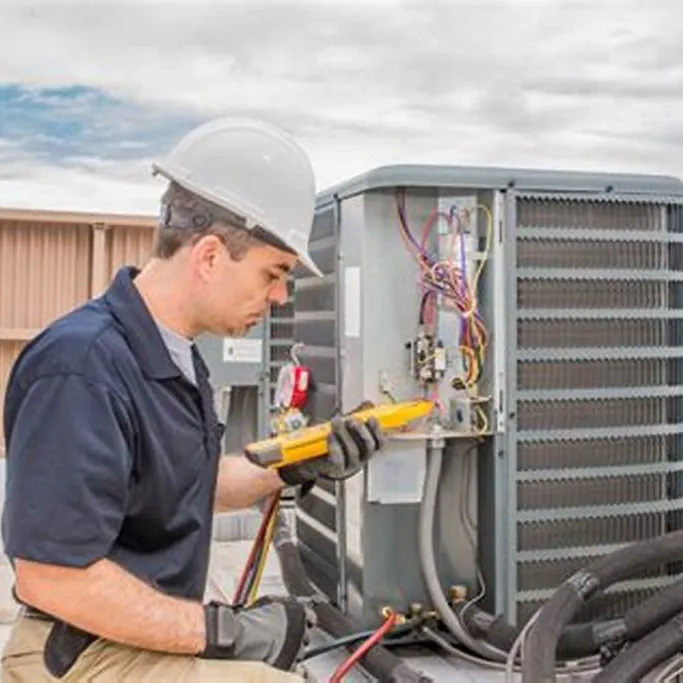
We start with what you noticed, then measure. That means checking voltage and amp draw at the compressor and fan motors, testing capacitors and contactors, reading refrigerant pressures and line temperatures, measuring the temperature drop across the indoor coil, and looking at airflow and the condensate drain.
In peak summer the failures we find most are weak capacitors, pitted contactors, burned-out condenser fan motors, blocked drain lines and low refrigerant charge. Refrigerant is not used up like fuel. If the charge is low there is a leak, and topping it off without finding the leak only buys time. We look for the leak and tell you whether repairing it makes sense for equipment of that age. If the system is old enough that replacing the air conditioner deserves a look, we will say so and explain why.
Why AC tune-ups matter more in Las Vegas
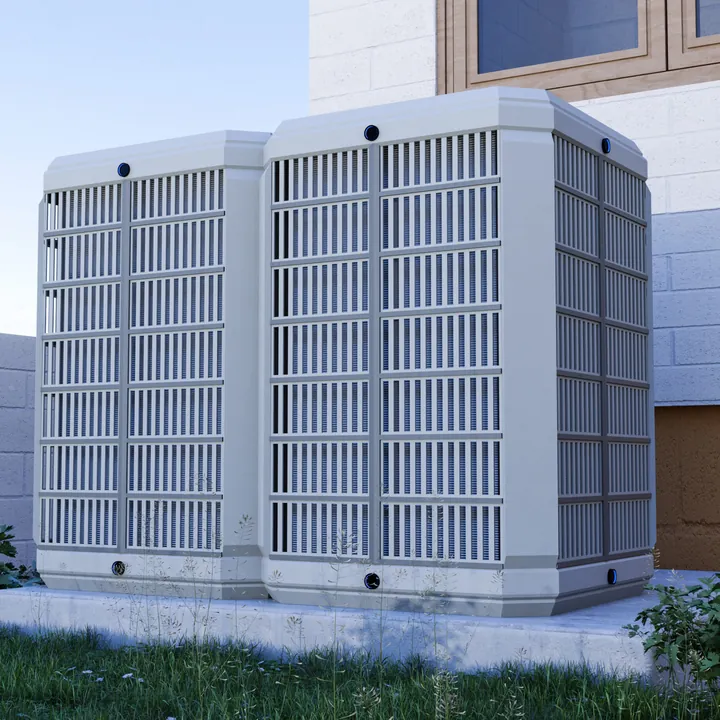
An air conditioner here can run most of the day from June into September, with afternoon highs above 100°F. That is far more wear per year than the same equipment sees in a milder climate. Wind-blown desert dust adds to it by coating the outdoor coil and loading filters, which raises operating pressures and electricity use.
A maintenance visit, ideally in spring before the first heat wave, covers:
- Washing the outdoor condenser coil
- Testing capacitors, contactors and electrical connections
- Verifying the refrigerant charge
- Measuring motor amp draw against the nameplate rating
- Clearing and flushing the condensate drain
- Inspecting the indoor coil, blower and filter
Between visits, look at the filter monthly in summer and keep two feet of clear space around the outdoor unit. With the power switched off at the outdoor disconnect, you can rinse the coil with a garden hose on a gentle setting. Never use a pressure washer, which flattens the fins. Our maintenance plan puts the visits on a schedule. If rooms at the end of a duct run never cool, the cause may be in the attic, and duct testing and sealing is worth asking about.
What happens when you call us
Tell us what the system is doing and how long it has been doing it. We send a licensed technician who finds the cause and explains the repair options before any work goes ahead. A dead air conditioner in July is an emergency, especially with children, older relatives or pets in the house, so we answer emergency calls 24 hours a day, 7 days a week. If a repair turns into a replacement, financing is available, subject to approved credit. Call 702-497-0888.
Frequently asked questions
Still have a question? Call 702-497-0888.
Why is my AC running but not cooling the house?
The usual causes are a clogged filter, a dirty outdoor coil, a failed capacitor or fan motor, or low refrigerant from a leak. Check the filter first and make sure the outdoor fan is spinning. If the outdoor unit hums with the fan still, or there is ice on the copper line, switch cooling off and call. Running it in that state can damage the compressor.
How often should an air conditioner be serviced in Las Vegas?
Once a year at minimum, and spring is the best time. Systems here run so many hours in dusty air that the outdoor coil and electrical parts take more punishment than they would elsewhere. If you have a heat pump that also heats the home, a second check in fall is sensible, since the same equipment works all year.
How often should I change the air filter?
Check it every month during summer and replace it when it looks gray and loaded. Standard one-inch filters in a Las Vegas home often need changing every one to two months in cooling season, and sooner with pets, nearby construction or windy weather. Thicker four- or five-inch media filters typically last several months.
My AC is freezing up. What should I do?
Turn cooling off at the thermostat and set the fan to On so the ice can melt, which can take a few hours. Replace the filter and make sure the supply vents are open. If it ices again, the likely cause is low refrigerant, a dirty indoor coil or a failing blower motor, and it needs a technician. Do not chip the ice off, because the coil fins and tubing damage easily.
Is it worth repairing an older air conditioner?
It depends on the age, the part that failed and how the system has been running. A capacitor or fan motor on a ten-year-old unit is worth fixing. A failed compressor or leaking coil on a system past 12 to 15 years, or on one that uses R-22 refrigerant, usually tips the decision toward replacement. We lay out both paths and you choose.
Schedule service
Tell us what is going on and we will call you back to set a time. For anything urgent, the phone is fastest.
702-497-0888- 24/7 emergency service
- 3200 Kings Way, Las Vegas, NV 89102
View in Google Maps