
Main Water Line Repair and Replacement in Las Vegas
The buried pipe between the water meter and your house is yours to look after. We find leaks on it, repair or replace it, and service the shut-off valve and pressure regulator at the house.
- 24/7 emergency service
- Licensed technicians
- All makes and models
What the main water line is and how leaks show up
Your main water line, also called the service line, is the buried pipe that runs from the meter near the street to the point where water enters your house. In most cases the water provider's responsibility ends at the meter, and the pipe from there on belongs to the property owner. Because it is underground, a leak can run for weeks before anyone sees water.
The usual signs:
- A water bill that climbs with no change in how you use water.
- Lower pressure at every faucet, not only one.
- A damp strip, soft ground or sinking soil between the meter and the house.
- Water in the meter box, or seeping along the driveway or sidewalk.
- The sound of running water near the front wall when nothing is turned on.
You can test for a leak yourself. Turn off every fixture and the irrigation, then watch the small flow indicator on the meter. If it still turns, close the main shut-off at the house and look again. Movement with that valve closed points to the service line, or to the irrigation branch that usually tees off ahead of the valve.
Repair or replacement: how we decide
We start by pinpointing the leak with pressure testing and acoustic listening equipment, so the digging happens in one spot and not along the whole yard. Buried utilities are marked before any excavation.
A single leak on pipe that is otherwise sound, such as a failed fitting or a section damaged by earlier digging, is usually a spot repair. We expose the pipe, cut out the bad section and splice in new material. Replacement is the better call when:
- The line has leaked more than once.
- The pipe is old galvanized steel that has corroded inside, or plastic that has turned brittle.
- The line is undersized, and pressure sags whenever two fixtures run.
New service lines are typically copper or a modern plastic pipe rated for burial. Where the route passes under a driveway, a wall or mature landscaping, a trenchless method can often avoid an open trench. Pipe bursting pulls a new pipe through the path of the old one, and boring pulls a new line through the soil between two small pits. Hard caliche, common in the valley, sometimes rules trenchless out, and we will tell you if it does. If the piping inside the house is failing too, it is worth looking at repiping at the same time.
The main shut-off valve and pressure regulator
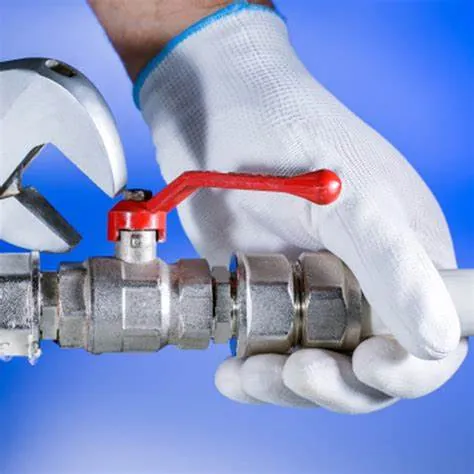
Two parts sit where the line reaches the house, often on the front wall near a hose bib or inside the garage. The main shut-off valve stops all water to the house. Find yours now, and turn it once or twice a year so it does not seize. Older gate valves with a round wheel handle often fail to close fully or break at the stem. We replace them with quarter-turn ball valves.
The pressure regulator, also called a pressure-reducing valve, brings street pressure down to a level your plumbing can live with. Most homes do well between 50 and 70 psi, and plumbing codes generally call for a regulator when incoming pressure is above 80 psi. A regulator that is wearing out lets pressure creep up or swing around. You may notice banging pipes, toilets that run on their own, a dripping relief valve at the water heater or faucets that spit when opened. We measure the pressure with a gauge, then adjust or replace the regulator.
Service line problems specific to Las Vegas homes
Las Vegas water is very hard, about 280 parts per million or 16 grains per gallon according to the Las Vegas Valley Water District. That mineral content leaves scale on valve seats and inside regulators, which is one reason both stick and wear out here.
Desert yards hide leaks well. With rock and drip irrigation in place of lawn, there may be no green patch to give a leak away, and water can follow the pipe trench and surface far from the break, or never surface. Most valley homes sit on concrete slabs, so a leak close to the foundation can look like a slab leak. If the meter test points inside the house, our leak detection service covers the lines under and through the slab.
Every gallon lost on your side of the meter is billed to you, and it is water the valley cannot spare.
What to do if your main line is leaking
If water is pouring out, close the main shut-off at the house. If the break is between the meter and that valve, call us and call your water provider, who can shut the supply off at the meter. We answer emergency calls 24 hours a day across Las Vegas and nearby Clark County communities.
For a slower leak, call 702-497-0888 or send us a message. A licensed plumber will locate the problem, show you what was found and explain the repair and replacement options before work begins. For a full replacement, financing is available, subject to approved credit.
Frequently asked questions
Still have a question? Call 702-497-0888.
Who is responsible for the water line between the meter and the house?
In most cases the property owner is. The water provider maintains the main in the street and the meter, and the pipe from the meter to the house is private plumbing. If you are not sure where the line is drawn at your address, your water provider can confirm it, and we can help you work out which side a leak is on.
How can I tell if the leak is in the main line or inside the house?
Use the meter and the house shut-off valve. With every fixture off, a moving flow indicator on the meter means water is escaping somewhere. Close the main shut-off at the house and check again. If the indicator keeps moving, the leak is between the meter and the house, or on the irrigation branch. If it stops, the leak is inside.
Can a main water line be replaced without digging up the yard?
Often, yes. Trenchless methods need only small access pits, usually one near the meter and one at the house, and the new pipe is pulled underground between them. Whether it works on your property depends on the soil, the depth and route of the old line, and which other utilities cross it. We check those before recommending a method.
How long does a main water line replacement take?
A residential replacement typically takes one to two days of work on site. Runs that cross concrete, very hard soil or a long front yard take longer, and permit and inspection scheduling can add time. Your water is usually off only while we connect the new line, not for the whole job.
What water pressure should a house have?
Most homes work well between 50 and 70 psi. Plumbing codes generally limit house pressure to 80 psi, because higher pressure wears out supply hoses, toilet fill valves, water heaters and appliance connections faster. If your pressure is above that, or changes a lot through the day, the regulator probably needs adjusting or replacing. We can test it with a gauge at a hose bib.
Related plumbing services
Schedule service
Tell us what is going on and we will call you back to set a time. For anything urgent, the phone is fastest.
702-497-0888- 24/7 emergency service
- 3200 Kings Way, Las Vegas, NV 89102
View in Google Maps