
Central Air Conditioning in Las Vegas, NV
Central split systems cool most homes in the valley. Here is how they work, how single-stage, two-stage and variable-speed models differ, and what keeps one running through a desert summer.
- 24/7 emergency service
- Licensed technicians
- All makes and models
How a central split system works
A central air conditioner is called a split system because it lives in two places. Outside sits the condensing unit, which holds the compressor, the condenser coil and a fan. Inside, usually in the attic, a closet or the garage, an evaporator coil is attached to a furnace or built into an air handler. Two copper lines carry refrigerant between them.
The indoor coil absorbs heat from the air the blower pushes across it. The refrigerant carries that heat outdoors, where the outdoor coil releases it. Cooled air travels through the ducts to each room and comes back through a return grille to be cooled again. The system does not create cold. It moves heat from inside to outside, which is why a dirty outdoor coil or a blocked return hurts performance so quickly. A heat pump is built the same way and can reverse the flow to heat the house in winter.
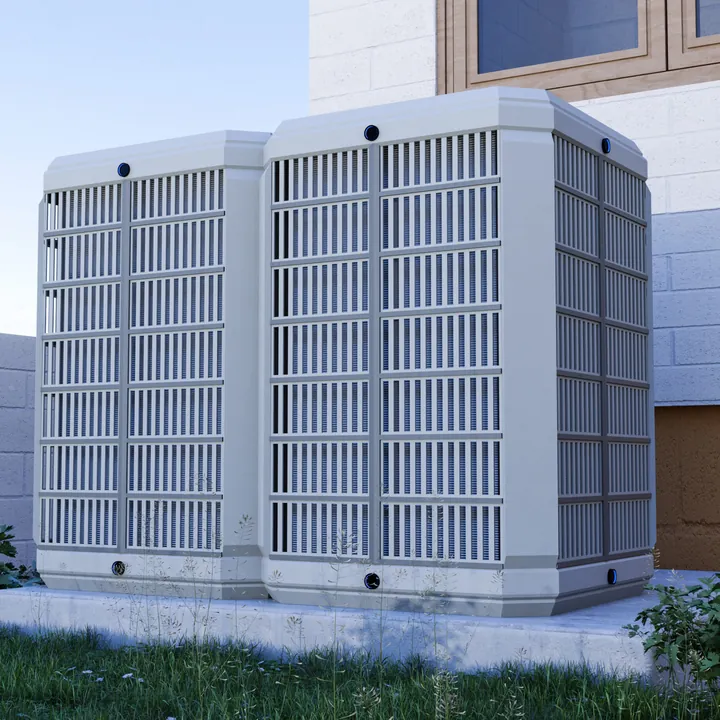
Single-stage, two-stage and variable-speed systems
The main difference between central air conditioners is how the compressor runs.
- Single-stage. Full capacity or off. It is simple, costs the least to buy and is the easiest to repair. Room temperature swings a little more between cycles.
- Two-stage. A low setting for ordinary days and a high setting for the hottest hours. Cycles are longer and gentler, and temperatures stay more even.
- Variable-speed (inverter). An inverter drive lets the compressor ramp up and down in small steps to match what the house needs at that moment. It runs for long stretches at low output, holds temperature closely, is typically the quietest of the three and usually uses the least electricity.
Inverter systems cost more, their electronics take more specialized diagnosis, and most need a matching indoor unit and thermostat to work as designed. They pay back best in homes that cool for many hours a year, which describes most of this valley. If the budget points to single-stage, a correctly sized and carefully installed unit will still do better than a more advanced system put in badly. Sizing and the installation process are covered under AC installation and replacement.
What Las Vegas heat and dust do to central AC
From June through early September, afternoon highs above 100°F are routine and a central system may run most of the day. Three local conditions deserve attention:
- Attic equipment. Many valley homes have the air handler and ducts in the attic, which gets far hotter than the air outside. Leaky joints and thin duct insulation give away cooling before it reaches the rooms. Duct testing and sealing often recovers capacity people assumed the unit had lost.
- Dust. Wind-driven desert dust packs into the outdoor coil and loads filters fast. A coated coil cannot shed heat, so pressures and power draw rise.
- Heat at the outdoor unit. High temperatures are hard on capacitors, contactors and fan motors, which is why those parts fail most often in July and August.
Shading the outdoor unit makes little difference, and anything that blocks airflow around or above it does harm. Keep it open on every side and skip covers and tight enclosures.
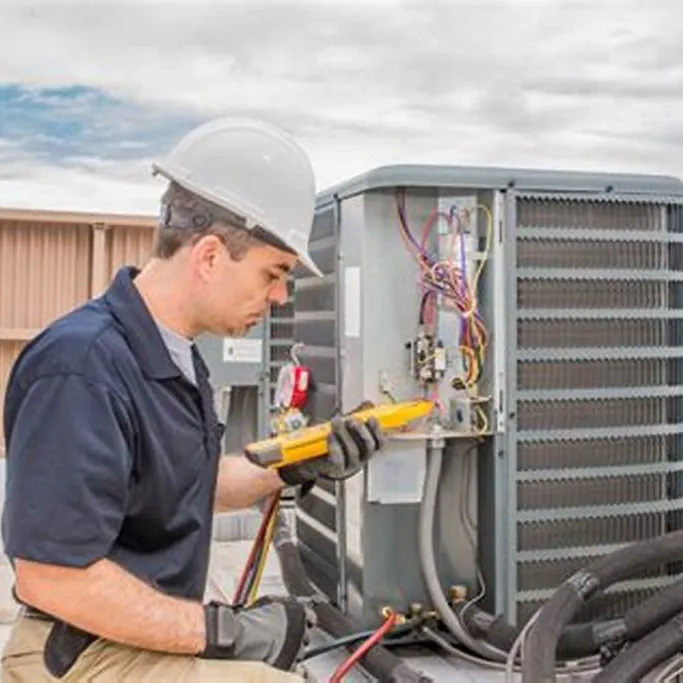
Repairs and yearly upkeep
The warning signs are the same on any central system: warm air from the vents, weak airflow, short cycles, ice on the refrigerant line, water at the indoor unit, a breaker that trips, or a new noise. Inverter systems usually show a fault code at the thermostat or on the outdoor control board. The code narrows the search, but the cause still has to be confirmed by testing.
Before each summer a central system should have its outdoor coil washed, electrical parts tested, refrigerant charge verified, drain line cleared and airflow checked. Our AC repair and maintenance page goes through that visit in detail. A programmable or smart thermostat helps as long as the setbacks are modest. Letting the house get very hot and pulling it down at 5 p.m. forces the system to recover during the worst heat of the day.
Talking through your options with us
If you are choosing a new central system, or trying to get more years out of the one you have, call 702-497-0888. A licensed technician will look at the equipment, the ducts and the layout of the house, then tell you plainly what we would do and why. We service all makes and models throughout Las Vegas and nearby Clark County communities, and we take emergency calls 24/7 for systems that fail in the heat.
Frequently asked questions
Still have a question? Call 702-497-0888.
Is a variable-speed air conditioner worth it in Las Vegas?
For many homes it is, because the cooling season is long and the system spends most of its hours at part load, where inverter equipment is most efficient. You also get steadier temperatures and less noise. It is less compelling if you plan to move soon or the ducts are in poor shape, since duct problems limit any system.
Why can't my AC keep up on the hottest afternoons?
Systems are sized for typical peak conditions, not record heat. On an afternoon well above 110°F, a properly sized unit may run without stopping and let the house drift up a few degrees, and that is normal. If it falls behind on ordinary summer days, look for a dirty filter or coil, duct leaks, low refrigerant or thin attic insulation.
What temperature should I set the thermostat to in summer?
Set it to the highest temperature at which you are comfortable, and many households settle around 76 to 78°F. Each degree lower adds run time and electricity. When you are away, raise it a few degrees and no more, so the system does not face a long recovery in late-afternoon heat.
Can I replace only the outdoor unit?
Rarely. Current equipment uses different refrigerants from older systems, and an outdoor unit is rated for performance only with specific indoor coils, so an old coil and a new condenser are usually not compatible. Mismatching them can cut capacity and shorten compressor life. A furnace that is fairly new can often remain, with a new coil fitted to it.
How loud should a central air conditioner be?
A healthy outdoor unit makes a steady hum and the rush of its fan, and variable-speed models are noticeably quieter at low output. New rattles, squeals, grinding, or a loud hum without the fan turning are not normal. Indoors, whistling at a grille or a booming duct usually means restricted airflow, often from a clogged filter or an undersized return.
Schedule service
Tell us what is going on and we will call you back to set a time. For anything urgent, the phone is fastest.
702-497-0888- 24/7 emergency service
- 3200 Kings Way, Las Vegas, NV 89102
View in Google Maps