Furnace Repair and Installation in Las Vegas, NV
Las Vegas winters are short, but desert nights get cold. We repair, maintain and replace gas and electric furnaces, and explain the carbon monoxide safety points every owner should know.
- 24/7 emergency service
- Licensed technicians
- All makes and models
Signs your furnace needs service
Furnaces here sit idle for most of the year, so problems tend to show up on the first cold night. A dusty, slightly burnt smell during the first run of the season is normal and should clear within an hour or so. These are not normal:
- The blower runs but the air is cool
- The burners light, then shut off after a few seconds
- A bang or boom when the burners ignite
- Burner flames that are yellow or wavering instead of steady blue
- Soot or scorch marks around the furnace cabinet
- The furnace starts and stops every few minutes
- A burning smell that does not go away
Before you call, confirm that the thermostat is set to heat, the filter is clean, the breaker and the furnace switch are on, and the furnace door panel is fully seated, since a safety switch cuts power when it is loose. If the furnace still will not run, note any flashing light code visible through the sight window. It helps the diagnosis.
Gas and carbon monoxide safety
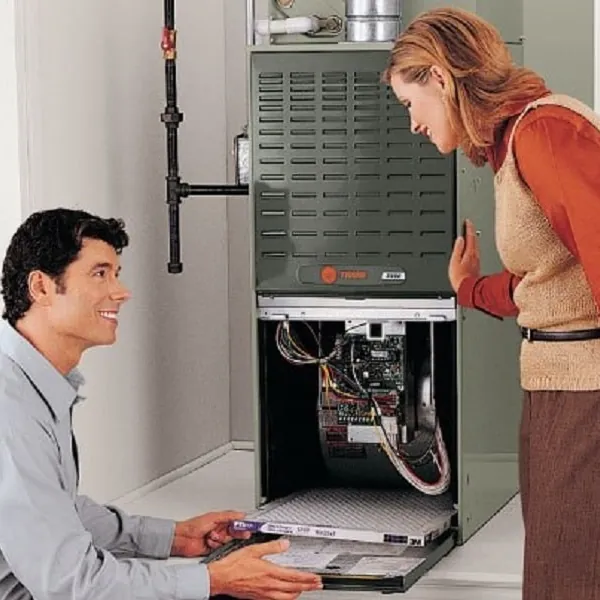
A gas furnace burns fuel inside a sealed heat exchanger and sends the exhaust outdoors through a flue. If the heat exchanger cracks, the flue is blocked or disconnected, or the burners are starved of air, carbon monoxide can reach the living space. You cannot see or smell it. Early symptoms resemble the flu without a fever: headache, dizziness, nausea, tiredness and confusion.
- Install carbon monoxide alarms on every level of the home and outside each sleeping area. Test them monthly and replace them by the date printed on the unit.
- If an alarm sounds, get everyone, pets included, outside into fresh air and call 911 from there. Stay out until responders say it is safe to go back in.
- If you smell gas, leave the building right away. Do not touch light switches or use a phone indoors on the way out. From outside, call the gas utility or 911. Once the utility has made the site safe, call us for the gas line repair.
Electric furnaces have no flame and produce no carbon monoxide, but a home with a gas water heater, range, fireplace or attached garage still needs alarms.
Gas or electric: choosing a furnace in Las Vegas
Most valley homes heat with a natural gas furnace that shares its blower and ducts with the air conditioner. Electric furnaces, which heat air with resistance elements, appear where there is no gas service. They are simple and need no venting, but they use a lot of electricity for the heat they deliver. Where gas is not available, a heat pump is usually the more economical way to heat with electricity.
For gas furnaces, efficiency is stated as AFUE, the share of the fuel's energy that ends up as heat in the house. Standard models are around 80 percent. Condensing models exceed 90 percent and need a condensate drain and different venting. With heating loads as light as ours, the more efficient furnace takes longer to pay for itself than it would in a cold climate.
The part that matters most here is the blower, because it also moves the air for cooling all summer. A variable-speed blower motor runs more quietly, uses less electricity and gives steadier airflow in both seasons. Size matters as well. A furnace that is too large heats in short bursts and wears faster, so we size by calculation and match the furnace to the cooling equipment it serves.
Fall maintenance for a furnace that sits idle
The time to find a problem is a mild afternoon in October, not a cold night in December. On a gas furnace we inspect the heat exchanger and burners, clean the flame sensor, test the igniter and safety switches, check gas pressure, confirm the flue is intact and drafting, and test for carbon monoxide. On an electric furnace we test the heating elements, sequencers and limit switches and tighten the electrical connections. Both get a blower inspection and a filter check.
Your part is small. Change the filter on schedule, since a clogged one makes a furnace overheat and shut down on its safety limit. Keep paint, gasoline, boxes and laundry away from the furnace, and leave supply and return vents open. If you would rather not track the dates yourself, ask about our maintenance plan.
When to call, day or night
No heat on a cold night, a furnace that keeps shutting itself off, a burning smell that lingers: those are reasons to call right away, at any hour. Emergency service runs 24/7. For repairs, tune-ups and replacement quotes, a licensed technician inspects the furnace, shows you what was found and goes over your options. Gas or electric, any make or model. For replacements, financing is available, subject to approved credit. The number is 702-497-0888.
Frequently asked questions
Still have a question? Call 702-497-0888.
How long does a furnace last in Las Vegas?
Typically 15 to 20 years, and often longer here because heating seasons are short and furnaces run far fewer hours than in cold climates. Condition matters more than age. A cracked heat exchanger, repeated ignition failures or parts that can no longer be obtained are the usual reasons to replace, and many furnaces are changed together with the air conditioner they are paired with.
Why is my furnace blowing cold air?
Most often the burners are not staying lit, or the furnace overheated and shut the burners off while the fan keeps running. A dirty flame sensor, a failed igniter and a clogged filter are common causes. Also check that the thermostat fan setting is Auto and not On, since On runs the blower between heating cycles and the air feels cool.
Is the burning smell when I first turn on the heat dangerous?
Usually not. Dust settles on the heat exchanger or heating elements over the long cooling season and burns off during the first run, which typically clears within an hour. If the smell is sharp, like melting plastic or hot wiring, continues past the first day, or comes with smoke, turn the furnace off at the thermostat and call for service.
Do I need a carbon monoxide alarm if my furnace is electric?
You do if the home has any fuel-burning appliance, such as a gas water heater, range, dryer or fireplace, or an attached garage. The electric furnace itself produces no carbon monoxide. Put alarms on each level and outside sleeping areas, test them monthly and replace them when they reach the manufacturer's end-of-life date.
How often should the furnace filter be changed in winter?
Check it monthly whenever the system is running. The same filter serves heating and cooling, so one that went through a dusty Las Vegas summer may already be loaded when heating season starts. One-inch filters commonly last one to three months, and thicker media filters longer. A clogged filter is among the most frequent causes of furnace shutdowns.
Schedule service
Tell us what is going on and we will call you back to set a time. For anything urgent, the phone is fastest.
702-497-0888- 24/7 emergency service
- 3200 Kings Way, Las Vegas, NV 89102
View in Google Maps